
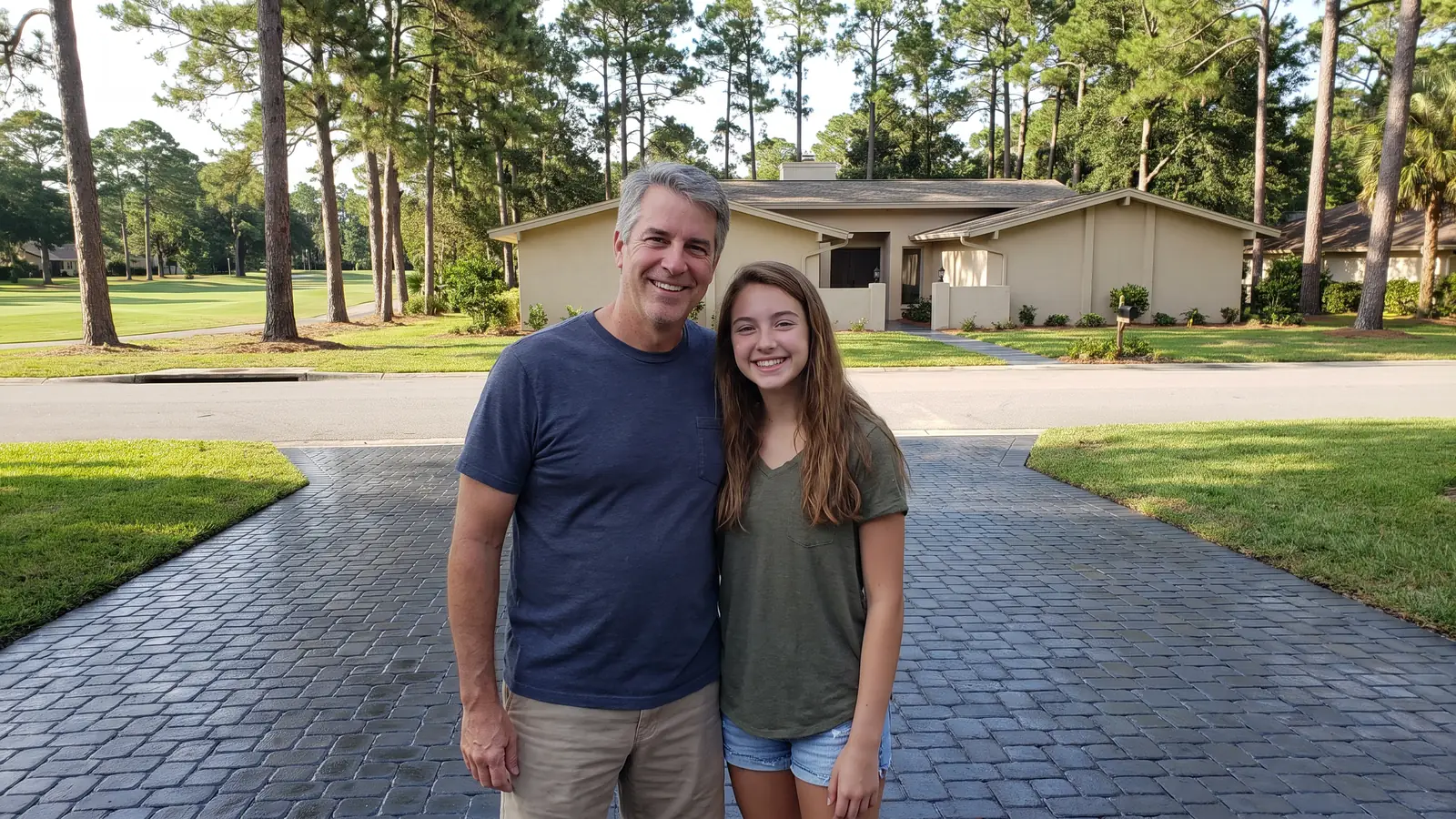
Paver sealing for Palencia homes
Paver Sealing in Palencia, FL
Palencia homeowners between US 1 and the Intracoastal can call (904) 946-8454 for a free paver sealing estimate.
- Brings out deeper paver color
- Fresh joint sand helps lock pavers in place
- Gives weeds less room to grow
- Makes the surface easier to keep clean
- Free estimate, no obligation
Request a Free Estimate
Free, no obligation.
Fast, careful paver sealing in Palencia
Palencia homeowners can get paver sealing from a local contractor, whether the pavers sit in the village or on an estate lot near the Tolomato River. The work covers driveways, courtyards and pool decks, and the estimate is free. Send your details when you request your free estimate; the answer comes within 1 business day, usually much sooner. Larger estate lots and small village entries are both welcome.
Picture a Palencia driveway with gray along the shaded edge, open joints where the sand washed out and a few white patches. After a wash, fresh sand and a new coat, those pavers read as one even color again. If you would rather describe your own surface first, call (904) 946-8454. The free estimate comes first, and any decision comes later.
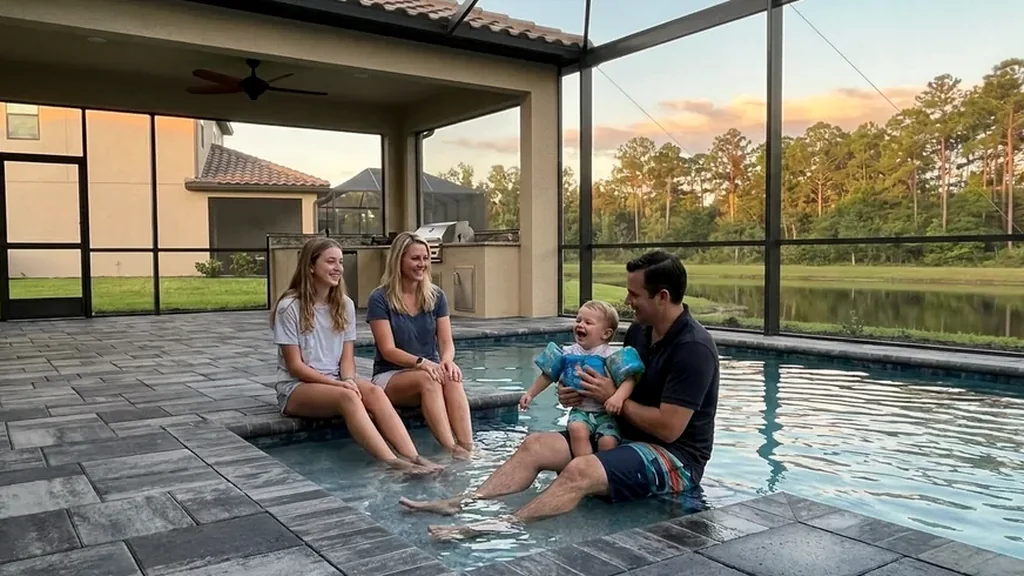
Why hire a local paver sealing contractor in Palencia?
Palencia's homes have a median build year of 2015, so many pavers here are still in their first years. Gates, saved trees and marsh air all shape the work, and to hear how that fits your lot, request your free estimate.
See it before you pay
The contractor looks at your Palencia driveway, courtyard or pool deck and gives a price. The visit is free.
A range to measure against
Across Northeast Florida, companies commonly list $1.75 to $3.25 per square foot, which gives you a yardstick for a Palencia quote.
Stone gets its own sealer
Travertine and brick take different sealer chemistry than concrete pavers, so the product is chosen for your surface.
Nothing is locked in
You pick the date and the finish and decide whether to go ahead. The estimate asks nothing of you.
Get Your Free Estimate in Palencia
Tell us about your pavers in Palencia.
Free, no obligation
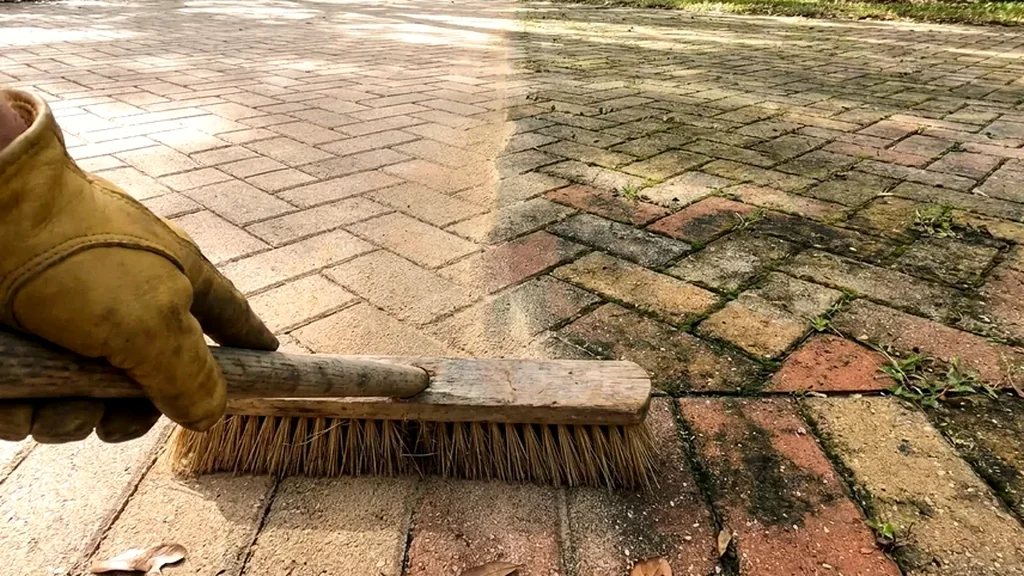
What paver problems show up most in Palencia?
Play sand that storms and sprinklers wash out
A St. Augustine paver company says most local installs used play sand, and that storms and sprinklers wash it out of the joints. The area's wet season runs May through October, with daily summer thundershowers. Empty joints widen, soil settles in and weeds follow. That is why sand goes back in after the wash and before the sealer. If you can see sand lines along the edge of the drive after a storm, that is the sand leaving. Ask what kind of sand goes back into your joints. Sprinklers add to the washing out. If yours run off a well, most Florida well water is high in iron and can leave orange stains, so check where the spray lands.
Algae where the shade stays damp
A St. Augustine area company says shade and humidity grow algae on anything that stays damp, usually side yards and north-facing patios. Palencia was planned around saved trees, with staff hand-marking them lot by lot and more than 250 acres of maritime oak and pine forest. If a patio sits under that cover, green shows up first where the sun rarely lands. The wash comes before any sealer. Side yards that never see direct sun are the first place to check. Staff hand-marked trees to save on every lot before builders started, which is why many Palencia lots still carry mature shade.
Pool surrounds that dry slowly
A St. Johns County paver company says pool surrounds need a different drying and application plan than an open driveway. If your Palencia home has a pool, the deck can stay damp long after a wash. Sealer needs a dry surface, so a careful contractor waits. Ask about traction before the day is set, since gloss can be slick on a wet deck. Pool decks may also need a new coat sooner than shaded patios do. Gloss can be slick on a wet deck, so traction is part of the choice. Pool surrounds on a Palencia lot may include travertine, and stone near water gets its own product and drying plan.
Travertine and other porous stone
A Jacksonville cost guide says travertine, natural stone and brick are more porous than concrete pavers and need different sealer chemistry, which raises the cost. Palencia was designed to echo Spanish colonial St. Augustine. If your courtyard or entry uses stone, mention it early so the contractor can plan the product and the price. Stone also stains more easily, so the cleaning step and the finish both get more attention, and the quote often reflects that.
A first coat that is peeling or cloudy
With a median build year of 2015, a Palencia set of pavers may already carry a coat that is several years old. A St. Augustine pressure washing company says peeling, cloudy sealer should be stripped before resealing, since new sealer over failed sealer peels again. Knowing the old product comes before choosing a new one. The contractor works out what is on the surface before choosing what goes over it. A patchy or flaking surface is the usual sign that the old product needs attention first. A home of that age may be on its first or second coat, and each new coat is easier to plan when the last product is known.
Does your Palencia neighborhood change how a paver job is priced?
Yes, because Palencia was built as many small neighborhoods, and lot size, gates and access change from one to the next. The community was planned for 2,642 homes, including condominiums, townhomes, estate homes and marshfront estate lots. Bigger driveways and wider courtyards mean more square feet, and square feet drive the total. Give the contractor your neighborhood name when you request your free estimate.
Palencia Village is the central gathering point, with the golf clubhouse, a swim and fitness center and the Village Green. Market Street was designed for small shops, offices and live/work units. A small entry or a short walk to a front door can cost more per square foot, because setup time does not shrink with the surface. Call (904) 946-8454 and describe how your home is laid out.
Costa del Sol, the last neighborhood built, has estate lots 90 to 100 feet wide and 180 to 300 feet deep. On lots that size, a long drive and a big courtyard add square feet, and tree cover adds cleaning time. Walk the property on a sunny day and note which parts stay green. Then request your free estimate and ask for the whole property to be measured.
What does paver sealing cost in Palencia?
Across Northeast Florida, companies commonly list $1.75 to $3.25 per square foot to clean, sand and seal. Where a Palencia job lands in that range depends on shade growth, lost joint sand, the type of stone and how much old sealer has to come off. Safe Touch's Nocatee page says failed sealer that must be stripped first costs more. For a number tied to your own pavers, request your free estimate.
Square footage matters most. Smaller jobs tend to run higher per square foot, and a gate, a tight side yard or furniture to move adds time. A long estate driveway is simple to reach, while a walled courtyard may take longer. Call (904) 946-8454 and the contractor can sort out which of these apply to you.
| Paved area | Typical example | Clean, sand and seal |
|---|---|---|
| 300 sq ft | Small patio or walkway | $525 to $975 |
| 600 sq ft | Two car driveway | $1,050 to $1,950 |
| 1,000 sq ft | Large driveway or pool deck | $1,750 to $3,250 |
| 1,500 sq ft | Driveway plus pool deck | $2,625 to $4,875 |
Math based on the $1.75 to $3.25 per square foot that Northeast Florida paver companies published as of November 2026. Your contractor sets the actual price after seeing the surface. Repairs, leveling and stripping failed sealer are usually extra.
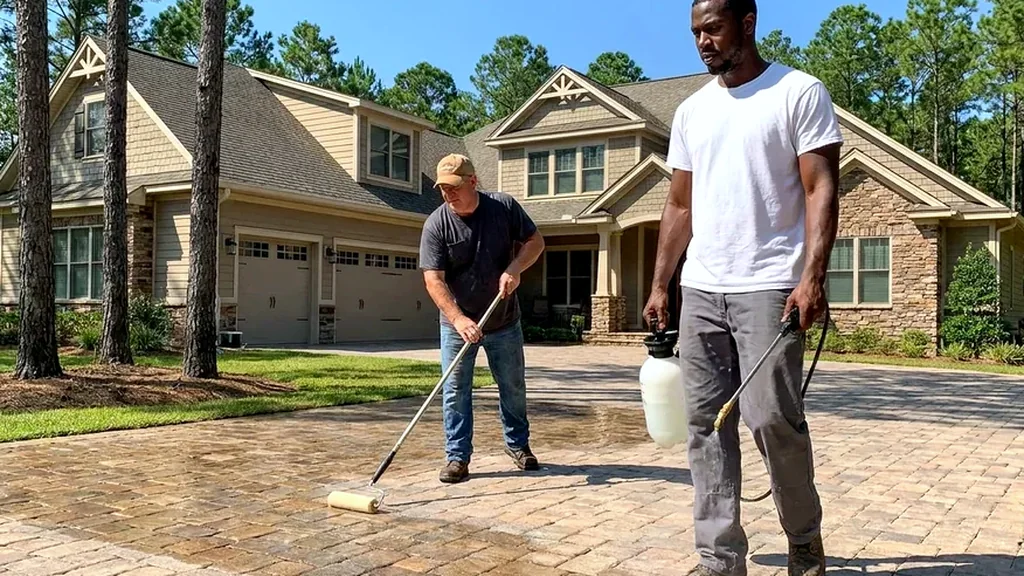
How does a paver sealing job work in Palencia?
Walk the property and check what is on it
The contractor starts by looking at how your Palencia pavers drain, where shade holds moisture and whether gates or tight side yards limit access. Sunken or rocking pavers get reset by an installer first, since sealing does not fix them. If the surface already has a coat, the contractor identifies it first. Mention any spots where water pools after a storm, since those change the cleaning plan. Photos of the surface help the contractor plan the visit.
Wash off algae, tannin and old film
Cleaning comes next, with extra time for side yards and north-facing patios, where algae grows on anything that stays damp. Leaf stains and rust marks are treated at this stage. Peeling or cloudy sealer is stripped, since a new coat over a failed one peels again. Rinse water stays off plants and the pool. Pressure matched to the surface keeps more joint sand in place. Plants near the pavers are rinsed and protected, and the water is directed away from the pool.
Fill the gaps between pavers
The wash takes joint sand out, so it is put back before the sealer. In this area many installs used play sand that storms and sprinklers wash away, so full joints matter. The surface is then swept clean. Brand-new pavers wait first, about 30 to 60 days according to one Jacksonville company, so white mineral haze can work its way out. A joint that is full and swept is what the sealer locks in. Sand is brushed in until the joints are packed.
Wait for a truly dry surface
The sealer waits until the surface is dry. Palencia gets daily thundershowers in the wet season, and a shaded courtyard or pool deck can take much longer to dry than a sunny drive. The contractor checks the forecast and holds the job rather than seal damp pavers, since that is a common cause of white sealer. A shaded spot gets extra time before the contractor says go. When rain is coming, the job waits for a drier day. With daily summer thundershowers in the wet season, the contractor checks the forecast for the whole day, not only the morning.
Put on the sealer coat
Now the sealer goes on in the finish you chose, sprayed and then back-rolled so it works into the joints. A wet look deepens color but shows scuffs sooner than matte. One Jacksonville company reports that walking is usually fine within a few hours, and that cars should stay off about a day. Water that beads on the surface later shows the coat is still working. Ask what to expect on your drive and walkway before the day is set.
Complete paver services in Palencia
Four stages make up a Palencia job: wash, re-sand, seal, cure, with algae, tannin and old film coming off first. Fresh sand goes in after the surface dries, and the sealer follows. Your contractor explains the order before any hose comes out. To find out how long yours would run, request your free estimate.
Driveways, walkways, courtyards and pool decks each wear in their own way. Drive lanes take tires and turning wheels, so a wet look shows scuffs there sooner than matte. Pool decks dry slowly and need a plan for traction. Call (904) 946-8454 and name every surface you want done.
What is already down decides the product. Water-based sealer cannot go over solvent-based sealer, so the contractor checks first. Most companies quote somewhere between two and five years before the next coat, and sun, shade and pool use move you around inside that range. To talk through your own pavers, request your free estimate.
Palencia's wet season runs May through October, with daily thundershowers, and November through April often brings long rainless stretches. That gives a contractor more room to find a dry day in the cooler months. Sealing never goes over damp pavers, so a careful crew watches the forecast. If a season is coming up, call (904) 946-8454 and ask what is open.
Questions to ask before you hire
- Do you price the driveway, the walkway and the pool deck separately?
- Will the sealer even out the color where a few pavers were replaced?
- Can you lift the tire marks off my driveway before you seal it?
- Will the same people who quote the job be the ones doing the work?
- Do you bring your own water, or hook up to my outside spigot?
- How do you handle weeds and grass growing up through the joints?
- Does your schedule fit my HOA's rules on work hours and trailers on the street?
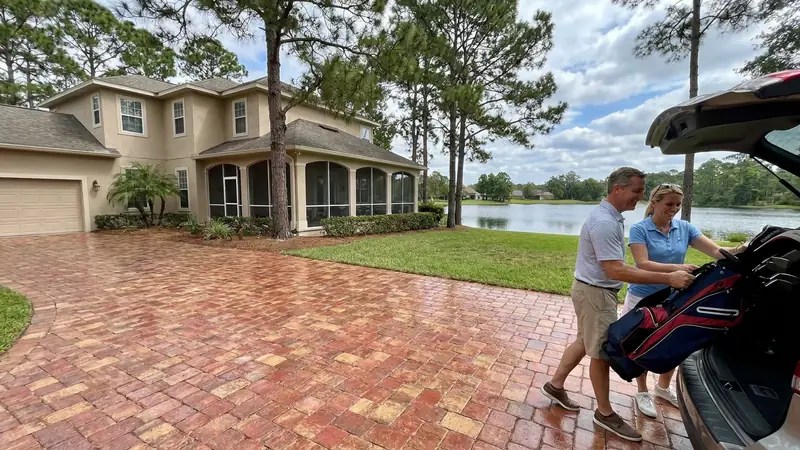
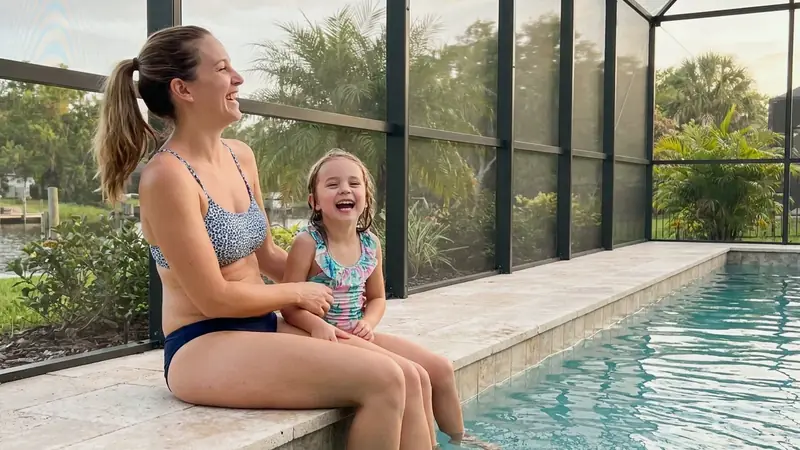
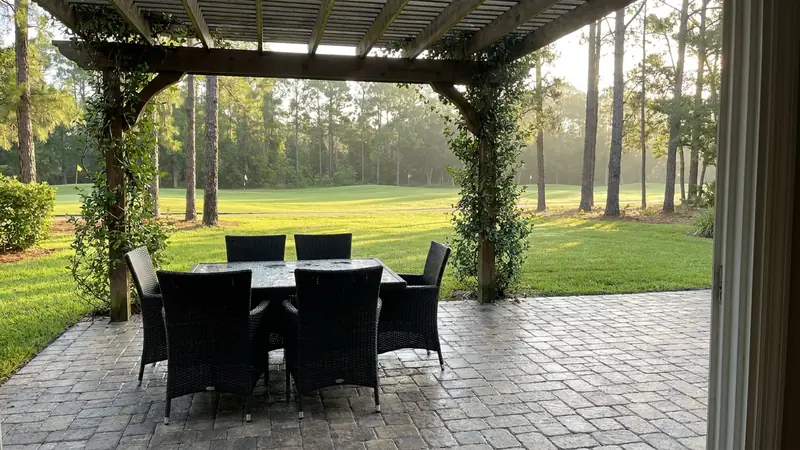
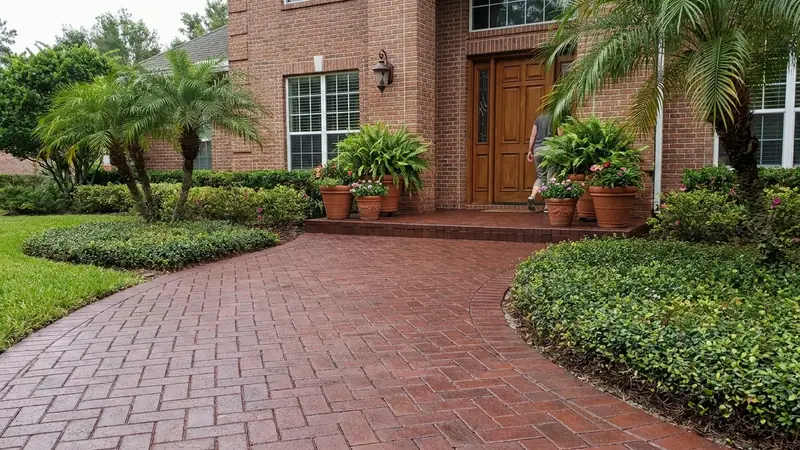
What do sealed pavers look like around Palencia?
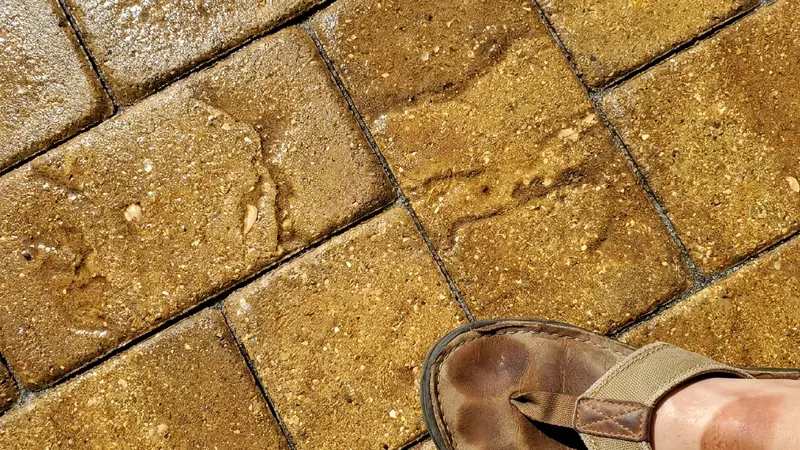
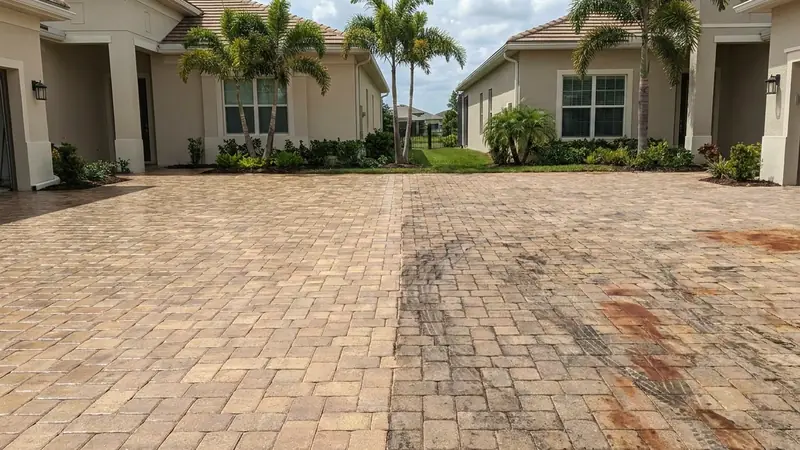
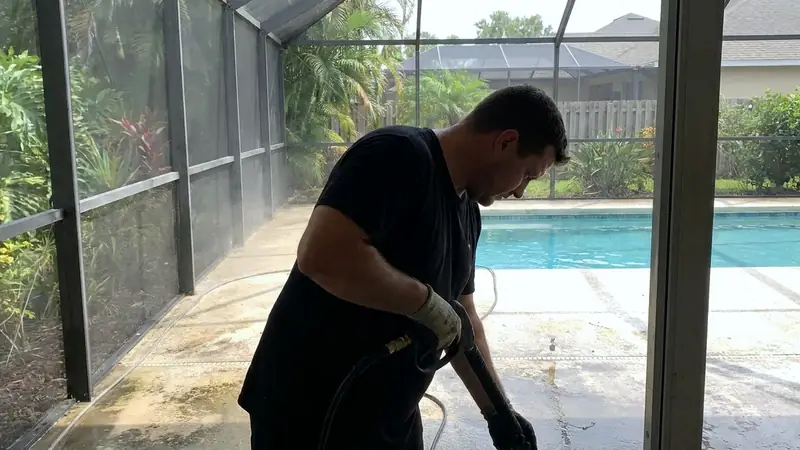
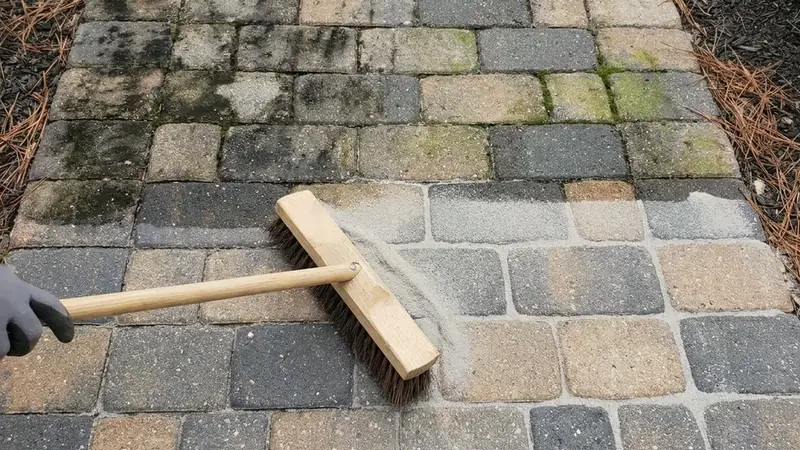
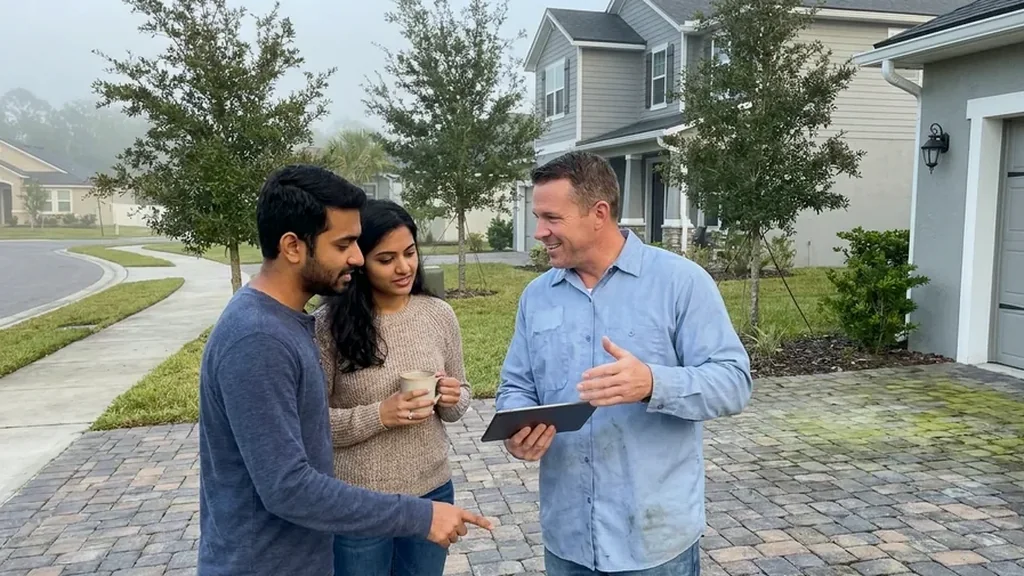
Why local matters in Palencia
Gates come first on a Palencia job, since gates, tight side yards and furniture can change a quote. An out-of-area bid may skip that. A local contractor also knows the neighborhood names, so you can say Costa del Sol or the Village and be understood. You can ask about all of it when you call (904) 946-8454.
Local knowledge also covers the weather. Palencia's wet season runs May through October, and the long dry stretch usually runs November through April. A contractor who works this coast knows which weeks tend to hold a dry day. To hear how a sealing day would be planned around the forecast, request your free estimate.
Marsh air and saved trees add one more layer. The Tolomato River marshes are close, and the community kept large areas of oak and pine. A contractor used to damp, shaded pavers expects algae and plans the wash for it. If that sounds like your patio, request your free estimate and mention which side of the house stays damp.
Is Palencia close to the water, and does that matter for pavers?
Yes, because about 2 miles of the community runs along the Intracoastal Waterway and Marshall Creek, and a 2005 article calls the Tolomato River its most notable natural amenity. During the British Period the Tolomato was known as the North River, and many locals still use that name. Humidity grows algae on anything that stays damp, so marshfront pavers get washed with that in mind. If you live on one of those lots, call (904) 946-8454.
Palencia grew from a project first called Marshall Creek, with full-force work starting in May 1997. It sits on 1,450 acres off US 1 between Jacksonville and St. Augustine, and the Palencia Club course winds through centuries-old oaks along the waterway. A boardwalk and fishing pier on the Tolomato River belong to its 30-acre park system. If one of them is close to home, request your free estimate and give your street.
Frequently Asked Questions
What makes paver sealing so costly in Palencia?
Prep takes more of the budget than the product does. A Jacksonville company says each hour of sealing is backed by about 2 to 3 hours of prep. On top of prep, the going published rate here is $1.75 to $3.25 per square foot, and stripping failed sealer costs more. A bigger job spreads setup time over more surface, which is why large drives tend to price lower per square foot.
What water-based paver sealer suits Palencia pavers?
Nothing fits every driveway, so ask the contractor which product is going on and the reason for it. If something is already down, the choice narrows, because water-based sealer cannot go over solvent-based sealer. Travertine and brick are more porous than concrete and need different sealer chemistry. Matte is the quieter look on stone, and a wet look deepens color but shows wear sooner.
How long does paver sealing last on a Palencia driveway?
Typical quotes run two to five years from one coat to the next. One Jacksonville company puts full-sun driveways at about 18 to 24 months and shaded walkways at about 24 to 36 months. Sun, scuffs and pool use move your number. Ask the contractor to look at your shade and traffic before quoting an interval. Wet-look coats on drive lanes show wear first.
How much does it cost to re-sand and seal pavers in Palencia?
The regional published range, $1.75 to $3.25 per square foot, already includes re-sanding as part of the clean, sand and seal work. Smaller jobs tend to cost more per square foot. A free estimate in Palencia gives you a figure for your own pavers. Pool decks and walkways count toward the total with the driveway, so a bigger layout costs more even at the same rate.
How long should new Palencia pavers wait before sealing?
Wait at least a month or two. One Jacksonville company advises 30 to 60 days after installation, and a St. Augustine company says about 60 to 90 days, so efflorescence can work out first. Joints are re-sanded before the first coat goes on. Fresh pavers are better left alone until that window passes. Efflorescence is the chalky white haze new pavers can push to the surface, and sealing over it too early traps it.
Can pavers be sealed while damp in Palencia?
No, sealer needs a dry surface. Sealing damp pavers is a common cause of white, hazy sealer. Palencia's wet season runs May through October, so a careful contractor waits for a dry day instead of pushing ahead. Ask what the contractor does when rain moves in mid-job. Sealing over moisture is what turns a coat white.
Does a gated street change a paver sealing quote in Palencia?
It can. A company in the St. Augustine area names gates, tight side yards and furniture to move among the things that change a quote. Tell the contractor about gate rules and where equipment can park when you ask for the estimate. Tell the contractor about gate codes or entry rules before the visit.
Will sealing stop algae on shaded Palencia pavers?
Sealing does not remove shade, and shade and humidity grow algae on anything that stays damp. A shaded walkway is washed and checked more often than a sunny drive. Companies quote about 24 to 36 months between reseals for shaded walkways. A sunny driveway usually needs its next coat sooner than a shaded walkway.
Ready for a Free Estimate in Palencia?
Call (904) 946-8454 and tell us about your pavers.
Free, no obligation