
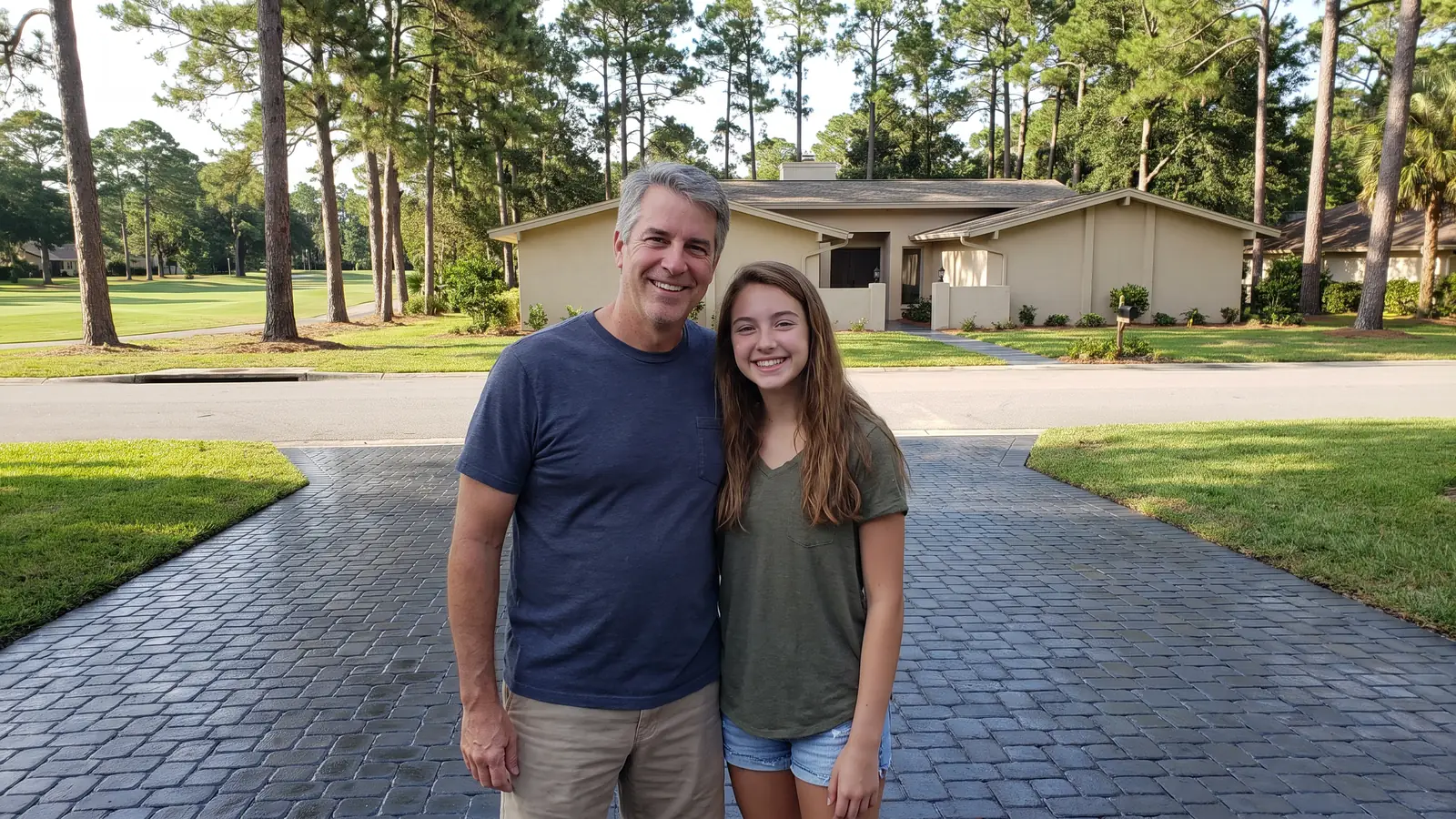
Paver sealing for Arlington homes
Paver Sealing in Arlington, FL
Long Arlington driveways add up fast in square feet, so call (904) 946-8454 for a free paver sealing estimate.
- Brings out deeper paver color
- Fresh joint sand helps lock pavers in place
- Gives weeds less room to grow
- Makes the surface easier to keep clean
- Free estimate, no obligation
Request a Free Estimate
Free, no obligation.
Fast, careful paver sealing in Arlington
A local contractor offers paver sealing in Arlington, from Lake Lucina and River Forest to the streets near University Boulevard. The work covers long driveways, front walks and pool decks, and the estimate is free. Want a price? You can request your free estimate, and an answer comes within 1 business day, usually much sooner.
Say your driveway runs a long way back to a 1950s ranch house, with brown tannin streaks, weeds in the joints and color that has gone flat. A wash, fresh sand and a new coat turn it back into one even surface. Call (904) 946-8454 to describe it first, and ask for the free estimate. The estimate is free, and the decision stays with you.
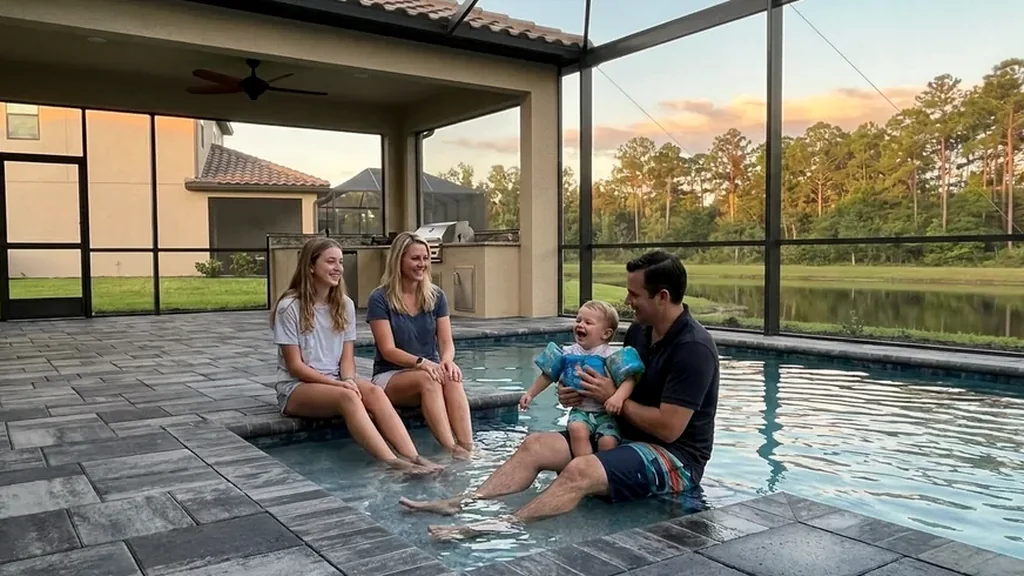
Why hire a local paver sealing contractor in Arlington?
Many Arlington homes date from the 1950s and 1960s, and ranch lots there often come with long drives and fences. A local contractor measures those drives in square feet, and to see what yours would run, request your free estimate.
Measured, not guessed
The contractor measures your Arlington driveway, walkway and pool deck and puts a price in front of you before you decide.
A range to hold bids against
Around Northeast Florida the published price runs $1.75 to $3.25 per square foot, which gives you a yardstick for any Arlington quote.
Finishes that suit mid-century lines
A wet look deepens color, while matte keeps the natural appearance, so you can match the finish to the house.
Free, and no strings
The estimate is free and carries no obligation, and you pick the day.
Get Your Free Estimate in Arlington
Tell us about your pavers in Arlington.
Free, no obligation
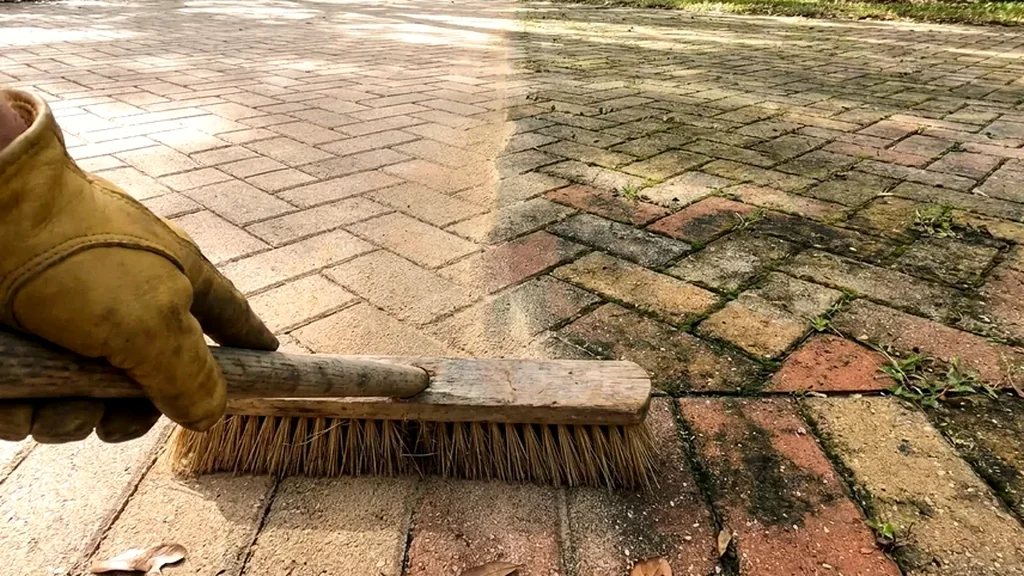
What paver problems show up most in Arlington?
Brown streaks from oak tannin
Safe Touch says Mandarin, Arlington and anything under a live-oak canopy get brown water stains from oak tannin on drives and walks. Arlington has trees to match: Tree Hill holds a 300-year-old oak, and the Arboretum's live oaks are over a century old. Sealer on the pavers keeps the next season from locking the stain in. Under those trees, the brown shows up first on the stretch of drive that stays shaded and strewn with leaves. A wash lifts what sits on the surface, but deep stains may not come out completely, one company notes. Brown streaks that sit on the surface respond to an early wash, while older ones may stay faintly visible.
Long drives that are hard to keep even
Safe Touch describes Arlington and East Arlington as ranch homes with long drives, fences and pool decks. A long drive gathers more of everything: oil drips, leaf litter and sun on one stretch and shade on another. Color can end up uneven from the garage to the street. A tape measure, not a guess, settles the size of the job. Fences along the drive can slow the work, so mention them when you call for the estimate. A pool deck behind the house gets measured in with the drive, so the total reflects the whole property.
Water that collects in low pockets
Arlington's high ground gave early residents good drainage, but not every street sits high. In July 2022 homeowners on Woolery Drive in Arlington Hills reported street flooding for at least a year. Pavers that sit in standing water pick up a film. That film is washed off before sealer goes on. Pottsburg Creek, which runs through southern Arlington, is fed mainly by rainwater and storm drains, so its level swings after storms. Tell the contractor which part of your lot stays wet. Low ground and high ground can sit on the same street, so a quick walk after a storm tells the contractor a lot. County-level, the USDA says the Ortega soil series is moderately well drained sand, and its water table can rise above 48 inches for a day or several after heavy rain.
Joint sand lost over the years
Rain totals around 52 inches a year in Jacksonville, and most of it comes May through September in short, heavy bursts. On sandy ground, rain carries joint sand away, and a Jacksonville company says summer downpours flush it out of unsealed joints. Open joints let in soil and weeds, so fresh sand goes in before the sealer. A joint that is full and swept is what the sealer ends up locking in. Weeds return first where the sand is lowest, which is usually along the edges.
An old coat that has failed
A Jacksonville company says older pavers may carry old failing sealer that needs stripping before cleaning. A second company says oil-based sealer from an earlier job has to be stripped first. The contractor has to know what is down before choosing a product. Ask the contractor to test a small spot if you are unsure, and share anything you know about earlier work. Even a brand name or a year helps. A coat that peels at the garage edge is the easiest sign to spot.
Do Arlington's older ranch streets and newer lots need the same paver work?
The method is the same, but what is already down differs. Homes in Lake Lucina were built from 1951 to 1962, with a median year of 1955, and Arlingwood has mostly brick ranch homes built from 1953 to 2025 with a median of 1961. On houses that age, pavers were probably added later, so the age of the pavers matters more than the age of the house. Tell the contractor your neighborhood when you request your free estimate.
Many Arlington streets report no HOA. River Forest, a mostly 1950s and 1960s ranch neighborhood with homes of about 800 to 1,600 square feet, has none on record, and Arlingwood has no mandatory one. With no association, the choice of finish is yours. Call (904) 946-8454 and talk through matte or wet look.
The area is known for mid-century modern architecture, with homes by Robert C. Broward, Taylor Hardwick and William Morgan, and many 1950s and 1960s houses with sharp edges and sloping roofs still stand. A natural-look finish suits lines like those. When you are ready, request your free estimate and describe your house.
What does paver sealing cost in Arlington?
The published price around Northeast Florida runs $1.75 to $3.25 per square foot to clean, sand and seal. A long Arlington drive means a lot of square feet, so the total can climb even at a fair rate. A coat that has failed has to be stripped first, which adds to the price. For a figure that fits your drive, request your free estimate.
Prep time does not shrink with the surface, so smaller jobs generally cost more per square foot. A Jacksonville cost guide also says locked gates, stairs, tight side yards and nearby landscaping add prep and masking time. Fences are common on Arlington lots, so mention yours. Call (904) 946-8454 and the contractor can tell you what applies.
| Paved area | Typical example | Clean, sand and seal |
|---|---|---|
| 300 sq ft | Small patio or walkway | $525 to $975 |
| 600 sq ft | Two car driveway | $1,050 to $1,950 |
| 1,000 sq ft | Large driveway or pool deck | $1,750 to $3,250 |
| 1,500 sq ft | Driveway plus pool deck | $2,625 to $4,875 |
Math based on the $1.75 to $3.25 per square foot that Northeast Florida paver companies published as of November 2026. Your contractor sets the actual price after seeing the surface. Repairs, leveling and stripping failed sealer are usually extra.
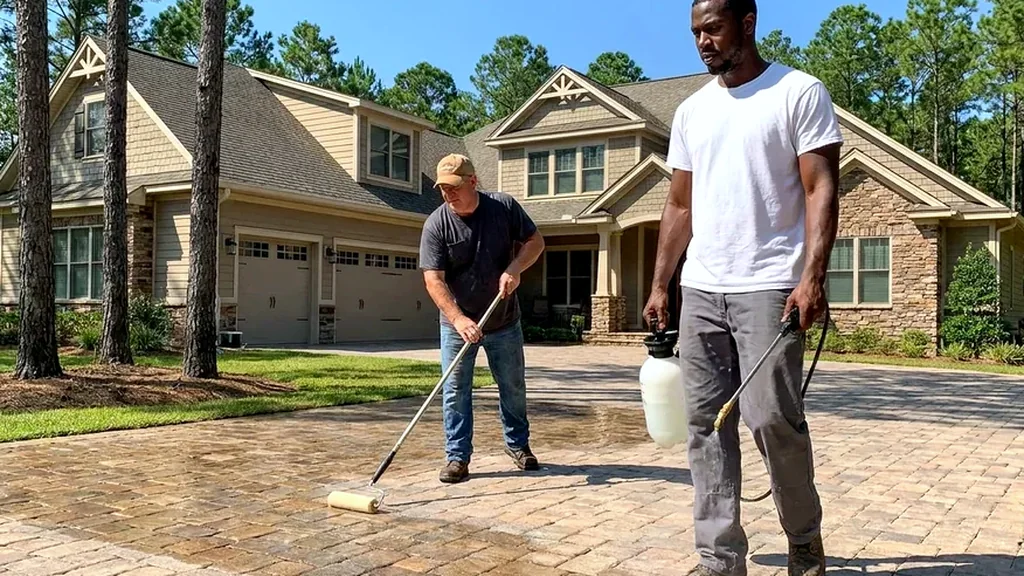
How does a paver sealing job work in Arlington?
Walk the drive end to end
The contractor walks from the garage to the street, noting where shade lies, where water pools and whether any section has sunk. Sealer locks in the surface as it is, which is why any dip or lifted section is reset ahead of time. An older coat on the drive matters too, so it is identified before anything is applied. Photos of any spot that holds water after rain help the contractor plan the visit. Mention any fence or gate along the drive too. A call ahead about fences and gates saves time on the day.
Wash off tannin, mildew and old film
Cleaning comes next, with extra time under oaks, where tannin stains and mildew build up. Oil drips and rust spots are pre-treated, though deep stains may not come out completely. A coat that is white, hazy or flaking is stripped, since new sealer over it fails again. Pressure is matched to the surface so the wash does not pull out more joint sand than it needs to. Plants along the drive are rinsed and protected. Rust or irrigation stains are treated too, since most Florida well water is high in iron.
New joint sand goes in
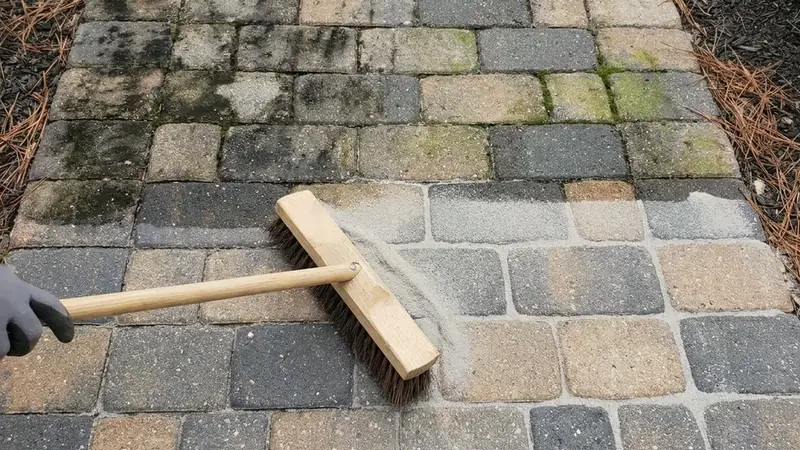
A wash empties the joints, so new sand goes in before any sealer. On sandy ground, open joints let soil in and give weeds a start. The sand is brushed in until the joints are full, and the whole drive is swept. Any reset section gets filled the same way. A reset section is tamped level first so the sealer does not lock in a dip. Brushing continues until the sand stops dropping. Ask what kind of sand goes into your joints. A full joint is what holds the surface together between coats.
Let the pavers dry first
Nothing is sealed until the pavers are dry. Sealer turns white when it is applied to damp pavers or laid on too thick, so a careful contractor waits. A shaded stretch of a long drive may need more time than the sunny part. Mornings after rain, the contractor checks the low end of the drive first. A wet forecast moves the job to a drier day. Arlington's high ground drains well, but low pockets hold water, so the contractor checks each end of the drive.
Seal in your chosen finish
Sealer is applied in your chosen finish, with a spray pass followed by a back-roll to work it into the joints. Walking is usually fine after a few hours, and one Jacksonville company says cars should wait about a day. Later, water that beads on the surface shows the coat is still working. A wet look shows wear in drive lanes sooner than matte, so ask which finish fits a drive that sees daily tires. Ask when the garage and the walkway will be usable again before the day is booked.
Complete paver services in Arlington
Expect four steps on an Arlington drive: wash, re-sand, seal, cure. The wash lifts tannin, mildew and old film. New sand follows once the surface is dry, and then the sealer. A local contractor lays out the steps first, so ask for a time estimate when you request your free estimate.
Long driveways, front walks and pool decks each ask for something different. A drive takes tires and turning wheels. A pool deck needs traction, and a Jacksonville cost guide says most get a penetrating sealer that keeps grip when wet. Call (904) 946-8454 and list every surface you want done.
Sealer choice begins with what is on the pavers now, since water-based sealer cannot go over solvent-based sealer. A wet look deepens color, while matte keeps the natural appearance. Quotes commonly run two to five years between coats, and Safe Touch calls two to three years typical. To talk it through, request your free estimate.
Rain sets the pace. Most of Jacksonville's rainfall arrives from May to September, while the stretch from November to April is driest. Damp pavers are never sealed, so the contractor keeps an eye on the forecast. To plan around a season, call (904) 946-8454 and ask what is open.
Questions to ask before you hire
- Will the sealer even out the color where a few pavers were replaced?
- Does your schedule fit my HOA's rules on work hours and trailers on the street?
- What time do you start, and how many hours will you be at my house?
- How do you handle weeds and grass growing up through the joints?
- If a paver is cracked, will you replace it before the sealer goes on?
- Will you clean and seal on the same visit, or come back once the pavers dry?
- Will the same people who quote the job be the ones doing the work?
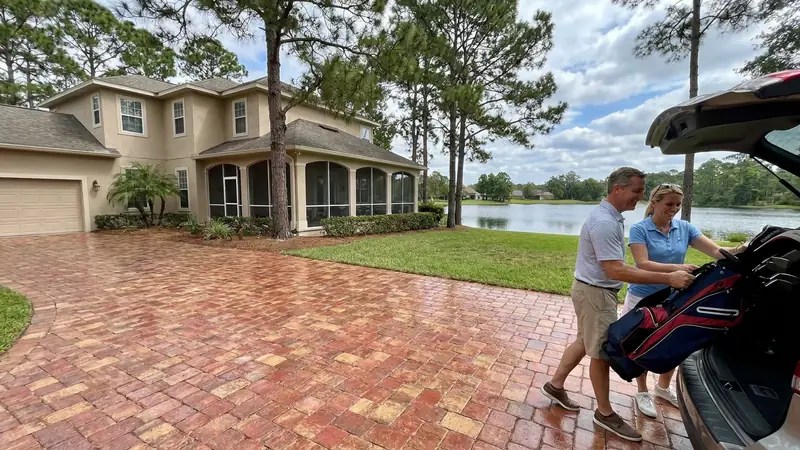
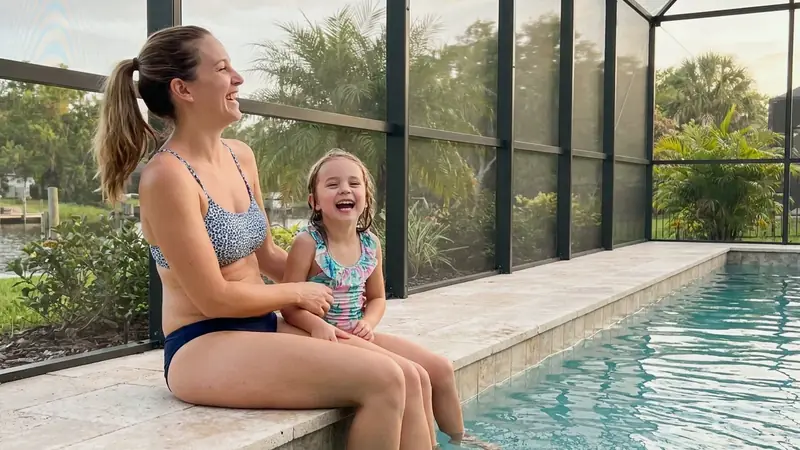
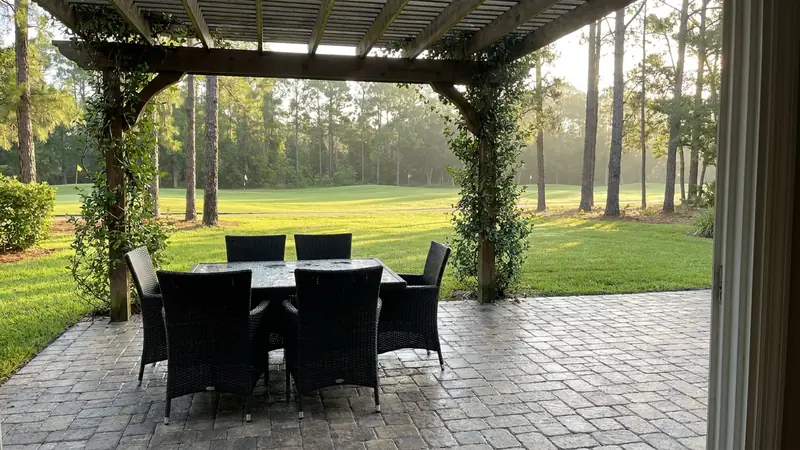
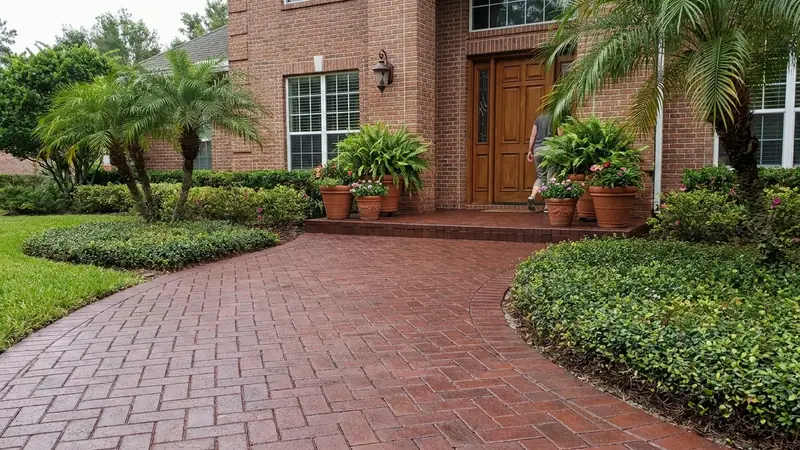
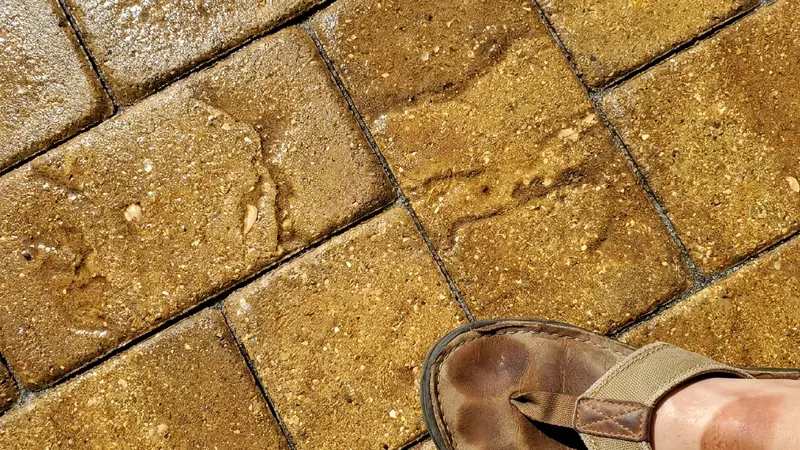
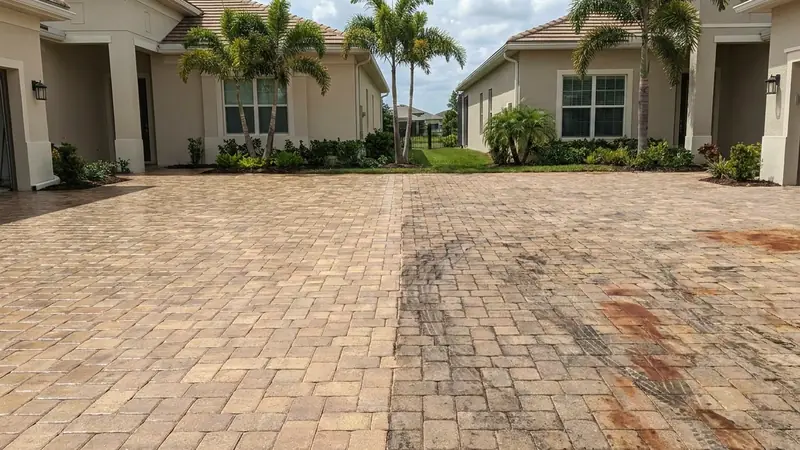
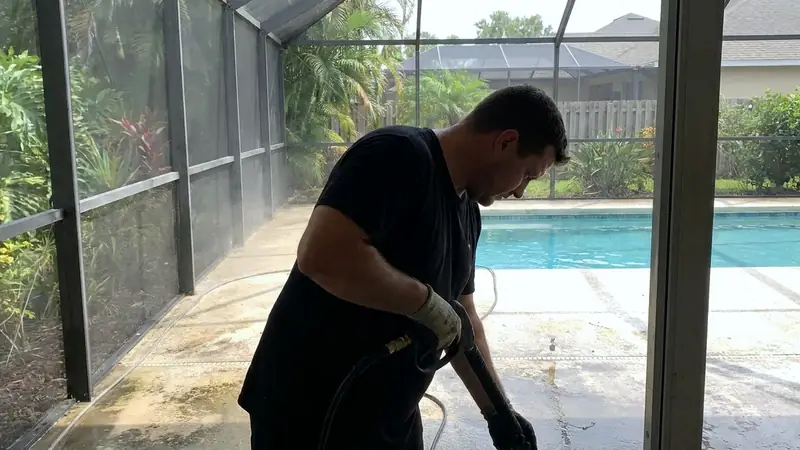
What do sealed pavers look like around Arlington?
Why local matters in Arlington
Long drives are normal in Arlington, so a local contractor plans for them. Fences, gates and a pool deck behind the house change how a crew moves and what gets measured. Ask about it when you call (904) 946-8454.
Local knowledge includes how water moves. Pottsburg Creek is fed mainly by rainwater, retention ponds and storm drains, so its level swings. After a heavy rain, a contractor from here checks the low end of the drive before choosing a day. To hear how that works, request your free estimate.
Trees are part of the job too. Arlington's oaks drop leaves that stain pavers, and the shaded stretches of a drive stay damp longer. A contractor who knows the area allows extra drying time there. If your yard has that kind of shade, request your free estimate and say which side stays dark.
Why do so many Arlington homes date from the 1950s and 1960s?
Because the Mathews Bridge opened in 1953, and Arlington grew faster than any other part of Jacksonville for the next two decades. The Jaxson calls it the city's first major post-war suburb built for the automobile, and H. Terry Parker owned 1,800 acres there by 1959. If your house goes back to that building boom, call (904) 946-8454.
Jacksonville University bought land in Arlington in 1947, and its 260-acre campus sits on the river. Tree Hill Nature Center opened as a city park in 1971, with a hill described as the county's second-highest point at 36 feet. The Arboretum on Millcoe Road sits on land that was strip-mined until 1961. Close to any of them, you can request your free estimate and tell the contractor your street.
Frequently Asked Questions
Why does paver sealing cost what it does in Arlington?
The biggest share of a bid goes to prep rather than product. A Jacksonville company reports roughly 2 to 3 hours of prep behind each hour of sealing. Regional pricing is published at $1.75 to $3.25 per square foot, and a failed old coat has to be stripped first. The free estimate turns that range into one number for your drive. Prep is the part you do not see, and it is where most of the hours go.
How much does it cost to re-sand and seal pavers in Arlington?
Published rates for the region sit between $1.75 and $3.25 per square foot, and re-sanding comes with the job. Smaller jobs generally cost more per square foot. A free estimate in Arlington gives you a figure for your own pavers. Ask for the drive, the front walk and any pool deck to be listed on separate lines so bids are easy to compare. A pool deck or front walk is added to the driveway measurement.
Is it good to seal pavers in Arlington, Florida?
Yes, because Arlington pavers face oak tannin, summer downpours and sun. Sealer on pavers keeps the next season from locking a stain in, according to Safe Touch. Summer downpours also flush sand out of unsealed joints, a Jacksonville company says. Arlington has many oaks, and sealing is how owners keep tannin from sinking in.
How long does paver sealing last on an Arlington driveway?
Quotes commonly run two to five years between coats, and Safe Touch calls two to three years typical. Full sun, pool chlorine and summer storms pull the number lower. A water test helps: when water stops beading and soaks in fast, a fresh coat is due. A walk along the drive lets the contractor weigh sun and shade before naming a date.
What water-based paver sealer works on Arlington driveways?
One product will not suit every drive, so ask which one is going on yours and why it was picked. If an older coat is down, water-based sealer cannot go over a solvent-based one, which limits the options. A wet look deepens color, while matte keeps the natural appearance. Ask what the product is and whether the contractor has checked for an older coat.
Does a long Arlington driveway cost more to seal?
It costs more in total, because the price is per square foot, and a long drive has many. A bigger project can get a better rate per square foot, since setup is spread over more surface. Measure the drive when you ask for the estimate. Fences and gates along the drive add prep and masking time, so mention them.
Do Arlington homes without an HOA need approval to seal pavers?
Usually not, since many Arlington neighborhoods report no HOA, so the finish is the owner's choice. If yours does have one, Florida Statute 720.3035 limits its review to what its declaration or published guidelines state or reasonably imply. Check your documents. If you rent the home out, a note from the contractor on the finish helps your tenant and your records.
Will sealing remove oak tannin stains from Arlington pavers?
Washing lifts stains that sit on the surface, and sealing keeps the next season from locking a stain in. Deep stains may not come out completely, one company notes. Pre-treating oil and rust spots helps. Brown streaks that are on the surface respond best to an early wash.
Ready for a Free Estimate in Arlington?
Call (904) 946-8454 and tell us about your pavers.
Free, no obligation